There are not too many occasions during this brilliant FIFA World Cup campaign that you get to see the walls of stoicism begin to crumble, and a genuine smile emerge from beneath the media trained “say little, say nothing” approach of Canada’s footballers when addressing the TV and press hacks on a daily basis.
Tajon Buchanan, perhaps the player least likely to drop his guard, did it last week when he was reminded that he has plenty of experience in big matches, including La Liga tilts between his Villarreal and teams such as Real Madrid. It was just a short glimpse of the pearly whites, but it was enough of a tell that a real human being lies beneath the facade that a professional athlete often presents.
On Wednesday, it was Nathan Saliba’s turn, while denying he followed any transfer rumours and that his focus was 100 per cent on the World Cup. His short-lived grin perhaps gave enough away that, yes, his World Cup performance to date — which includes a goal from a dead ball in the opener against Bosnia and Herzegovina and a worldly assist on Promise David’s late goal vs. Switzerland — has indeed piqued the interest of such clubs as Manchester United.
The fact is, with the exception of a small minority of players, it is quite the challenge to find a line of questioning that is able to draw out a notable response. These are professional athletes, less is more and more is dangerous when it comes to talking to the media … at least that is the message that their respective clubs have hammered home their entire careers and is clearly the message their national team would prefer as well.
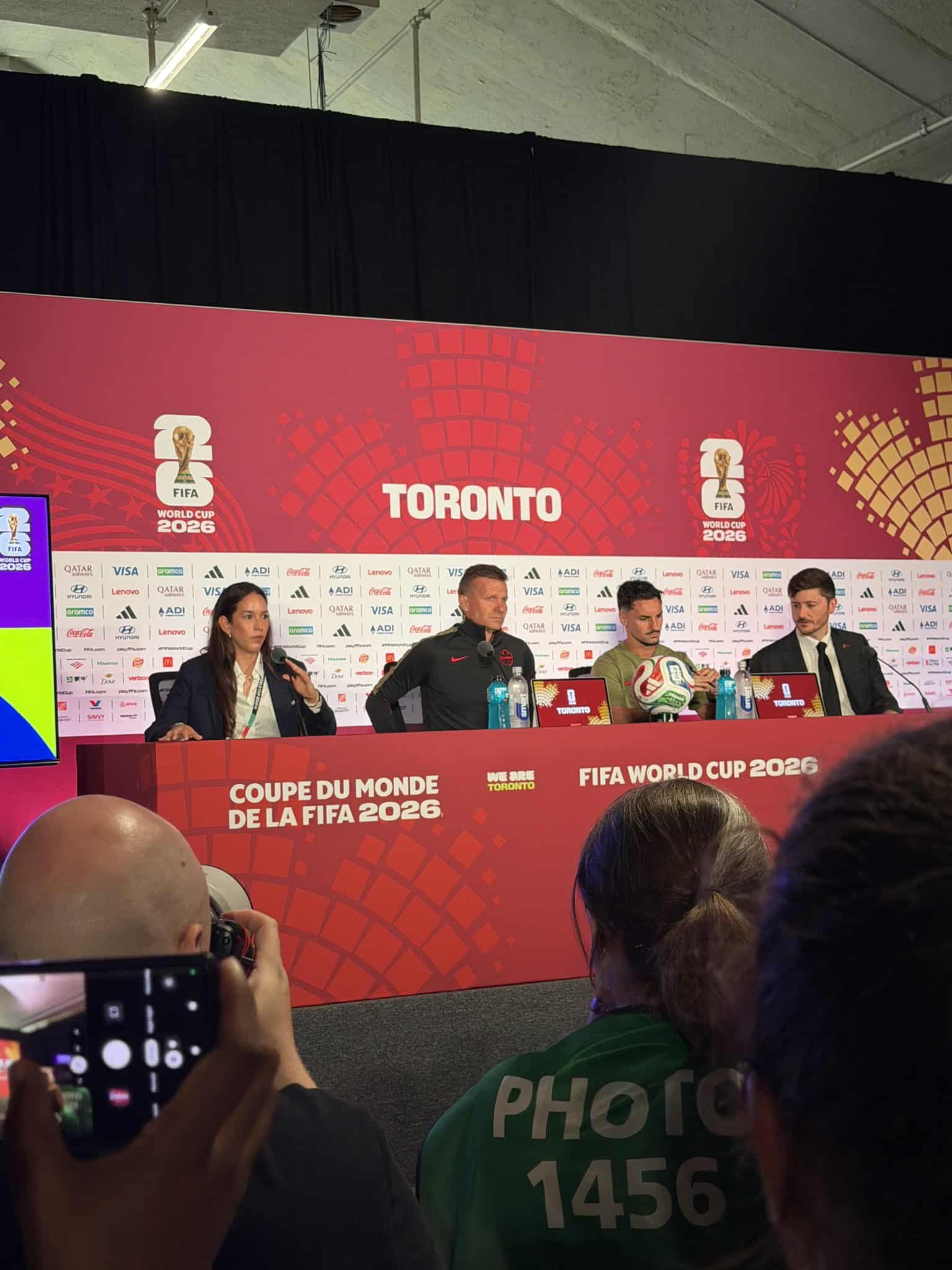
And let’s be honest, we are spoiled with head coach Jesse Marsch, who rarely fails to provide the media with at the very least a thoughtful answer, and if we’re lucky a downright entertaining one. Marsch follows on from his predecessor John Herdman, who was also an outstanding orator. The coaches certainly understand their role and will (in most cases) politely respond to even the most asinine of questions that we are able to put forth.
Some of us covering Canada this summer have been doing so for a month now. It is challenging to conjure meaningful queries on a daily basis, and I for one can appreciate how difficult it must be for the players themselves to conjure any semblance of enthusiasm for their media duties. They just want to get on the pitch, right? Kick a ball, keep the body moving and prepare for the next “biggest game in Canadian soccer history.”
Some find a way, though. They even seem happy to do it. Sadly, the much overworked and underappreciated Canadian media-ops simply cannot trot out Alistair Johnston, Promise David or Tani Oluweseyi every single day, even if the reporters would gladly welcome them.
Alistair Johnston
Johnston in particular is a go-to when needing a quote. It would be understandable if the Glasgow Celtic defender tip-toed around his answers, given that for most of the year he has to deal with the notoriously brutal Scottish press. On the contrary, Johnston’s responses are so articulate and at times fascinating that perhaps he feels, as most of us know, that once he retires he will be able to slip into a media career if and whenever he wants to … and probably do a much better job of it than the rest of us!
Promise David
Promise David is a player who is just fun to talk to. You never know what will come out of his mouth and, as live TV will attest, it could be anything. The thing with Promise is, it never feels performative; it is genuine and just flat-out likeable. Garnering media points this way can serve an athlete well, especially when those inevitable moments of adversity present themselves.
Tani Oluweseyi
Oluwaseyi has been the surprise card since his call-up against France in 2024. Jumping from Major League Soccer to a club as storied as Villarreal in Spain suggested a confidence, and that is confirmed when he speaks. A vocal member of any training session, Oluwaseyi is an excellent ambassador for the team, at the very least always presenting a genuine willingness to offer considered responses to any questions proffered.
Of course, it helps when the team is doing well. Covering a team in a bad place can be a nightmare for all concerned. Although there are a broader variety of questions to ask of a losing team, a winning team is an altogether more enjoyable experience, unless you shade on the side of schadenfreude, of course.
At this point in this remarkable summer of ‘26, Canada has enjoyed historic success though, and the result of Saturday’s Morocco match is irrelevant … unless of course they win. If it does end on Saturday, however, the final media availability will likely not be any different to what we have experienced over the last month or so, mutually respectful, a very Canadian thing.