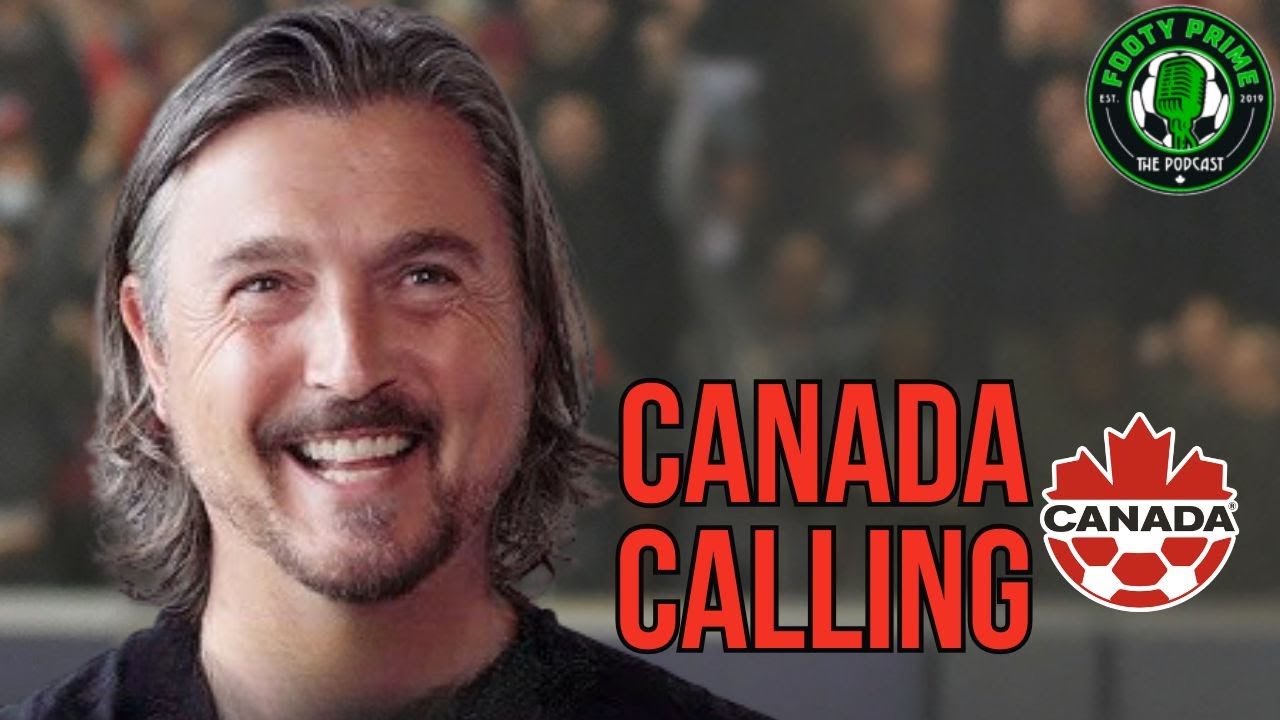
The Footy Prime crew sat down with an old pal of the show, Cavalry FC head coach Tommy Wheeldon Jr. What followed was one of the more honest and wide-ranging conversations the show has had about Canadian football from the ground up.
On the Snowy CanPL Final
The CPL Championship final played out in brutal winter conditions in Ottawa, went viral around the world, and Tommy had barely spoken about it since. His read on the game itself was pretty straightforward.
“You probably will see the reaction on my face on the first play of the game when Marco comes out and shanks it to Rodriguez and he almost chips him. I’m like, this is not a game of football so we’re going to have to prepare the best we can.
“It was the best free marketing this country could have got leading into a World Cup year because it’s been seen by over a billion people. Imagine having a bad day at the office. You try and go radio silent for a bit and a billion people see it and you’re like, okay, you got to live with that. No problem. But it can’t happen again.
And the reason I say that is, we’ve got to have contingency plans because every sporting director or agent or new player outside of Canada that I speak to, they’re like, wow, you guys really play in the snow, hey? Like, we can, but we’d rather not.”
Player safety was a real concern. “I was worried for career-ending injuries. Goteh Ntignee broke his hand actually because he lost his footing and he had one of those hand warmers in and he fell and broke his hand. He played most of the second half and extra time with a broken hand.”
On the decision to bring substitutes inside to keep warm, and the chaos that caused with the officials:
“We asked for benches because Ottawa is the only stadium that doesn’t have it. It’s a league requirement, they couldn’t get it. I’m like, well there’s snow coming, not to mention it’s protection of the players which is health and safety. (laughing) I don’t know if you’ve seen but we got snowballs thrown at us after Fraser Aird scored, like come on, this is comical now.”
“But anyway, so we said look, go inside. FIFA Club World Cup, it was too hot so players were keeping cool coming out. The flip side of that is it’s too cold. Players are inside, keep warm, bring them out. If we have to play without a man down, I don’t see that as a cheat. I got accused of being a cheat by their coach. I’m like, hang on a minute. We’re keeping them inside. You can do the same. The referees didn’t know what was going on. It was new for them and then ordered me to bring them back out or I get booked. Crazy.”
The snow-related HT decisions that still linger: “I make a change and bring Ali Musse off. He’s a Formula One car, he’s not an SUV. I bring him off because he’s getting caught in the snow. I needed SUVs getting through there more than Formula One vehicles. Sergio Camargo came on and was exactly that. But had I known the pitch was being cleared, it changes. Now, whether the result stays the same or not, I don’t know. But you’re forever having these questions that you got to try and put to bed.”
On Being Called Into Jesse Marsch’s Camp
Tommy was in the mix for the Canada head coach job before Jesse Marsch was appointed. So when Marsch turned around and invited him in as a guest coach for the January North American camp, it said something.
“As you guys know I was in the process for the job. So that speaks volumes for Jesse to bring me in, out of respect to the work I guess I’ve been doing with Cavalry and Canadian football in general. He has done a great job in connecting people. He’s had James Merriman in one, I think Patrice Gheiser has been in one, Martin Nash has been in one. He’s trying to spread the love and the knowledge of the game.”
On what he’s looking forward to learning from Marsch specifically:
“I love his enthusiasm and his clarity. We have talked, like he comes out to the games and he sent me a really nice message after the final funny enough. He has been very supportive in that way of the Canadian game and that’s brilliant to see. What I like about him is watching what he’s been through the Red Bull system. There’s a clear identity in terms of the high pressing, the front foot football, and it does suit a lot of the profiles we have in Canada.”
On Jesse’s broader approach to connecting the Canadian football ecosystem:
“He’s trying to spread the love and the knowledge of the game so we all feel part of it. Because what is our job? To create a broader base for the Canadian player to come through. If we understand what the national team is doing, we can get the younger ones coming through and really be the support system.”
Players he’s most excited to work with in camp:
“I’ve never worked or played against Osorio and I hear such great things all the time. I want to see how he operates because people say he was one of the best players coming through at TFC, the best player in training, his leadership is good. I’ve played both MLS sides, Montreal and Whitecaps, in different ways and I’ve seen most of those players on there in different ways. He’s the one that’s been in the national team a long time that I’ve not gotten to see.”
“Same with Laryea. I just think it’s those two I’m excited to see on a regular day-to-day basis. And then beyond that, I’m always going to say Joel Waterman.”
Watch the Full Interview
Or Hear the Full Episode on Spotify | Apple Podcasts
On CPL’s Place in Canadian Football
Tommy has been at Cavalry going into year eight. He knows exactly what his job is, and he’s not pretending otherwise.
“The reality is that we have to provide players that play really well and sell. We’ve got to move them on. Joel Waterman wouldn’t be playing for the national team if he was still with me. And I always think that’s our job. Do I want to get my club more silverware and play in Concacaf? Absolutely. But in that experience, we’re creating moments and memories for fans, for everyone but we are part of the food chain.”
“I want to make sure I’m clear on my job. That’s why owners have kept me in this job so long. I’m going into year eight. I know what my place in the food chain is so my job is to make the best environment possible for Canadian football in the area I live in.”
On Mihail Gherasimenko as a recent example of how the pathway is supposed to work:
“He wasn’t ready to compete for a first team place with the Whitecaps and they had a killer season. He came to me and the coaching staff, Jay Wheeldon did a lot of great work with him. He had a great season with us and suddenly he’s gone from a Moldovan youth international to now playing for the full international side and the Whitecaps have just given him a decent MLS deal.”
On the state of Canadian development overall
“Probably the quickest data point is Unattached FC. When was the last time we saw that on any men’s national team? And the fact now we’re getting it where all of the North American players are with clubs and now there’s a list of well, he can’t make it, well can he come in. There’s a depth chart being designed on purpose.”
“You’re now seeing that on the women’s side where there’s Northern Super League (NSL) players that are currently playing. You’re not necessarily seeing as many university or Unattached FC and I think that’s credit to how we needed a structure. Our job now is to make sure our structure lasts and we create our dollar vote.”
His message to fans on supporting the domestic leagues:
“Whether it’s CPL or NSL, we still need the dollar vote. Everyone’s like, yeah, click like buttons, hearts, we love this league, oh it’s flawed because Valour dropped out or there’s only six teams in NSL. Well, invest. Buy a ticket. Give a ticket. Buy a jersey. Spread it. Then you’re part of the system.”